Featured
The Role of Nonprofit Counseling in 2026 Monetary Success
Securing Better Loan Terms in the Nation This Quarter

Utilization Techniques for Customers in Your State
Table of Contents
The Development of Risk Evaluation in local communities
By middle of 2026, the shift from traditional direct credit scoring to complex expert system designs has actually reached a tipping point. Financial institutions throughout the United States now count on deep knowing algorithms to predict borrower habits with a precision that was difficult simply a couple of years back. These systems do not simply take a look at whether a payment was missed; they analyze the context of financial choices to determine credit reliability. For locals in any major metropolitan area, this means that the basic three-digit rating is progressively supplemented by an "AI self-confidence interval" that updates in real time based on everyday transaction information.
The 2026 version of credit report places a heavy emphasis on capital underwriting. Instead of relying entirely on the age of accounts or credit utilization ratios, lenders use AI to scan bank declarations for patterns of stability. This shift advantages people who may have thin credit files however preserve constant residual income. However, it likewise demands a greater level of financial discipline. Artificial intelligence designs are now trained to determine "tension signals," such as a sudden increase in small-dollar transfers or modifications in grocery costs patterns, which might indicate impending financial hardship before a single bill is actually missed out on.
Real-Time Credit Monitoring and Predictive Analysis

Credit tracking in 2026 has actually moved beyond basic notifies about brand-new queries or balance changes. Modern services now provide predictive simulations driven by generative AI. These tools enable customers in their respective regions to ask particular concerns about their financial future. For instance, a user might ask how a particular vehicle loan would impact their ability to receive a mortgage eighteen months from now. The AI evaluates existing market patterns and the user's individual data to supply a statistical probability of success. This level of foresight helps prevent customers from taking on debt that might threaten their long-lasting objectives.
These keeping an eye on platforms likewise function as an early caution system against sophisticated AI-generated identity theft. In 2026, artificial identity fraud has actually become more common, where crooks blend genuine and fake information to develop entirely new credit profiles. Advanced tracking services utilize behavioral biometrics to detect if an application was most likely completed by a human or a bot. For those concentrated on Credit Counseling, staying ahead of these technological shifts is a requirement for preserving monetary security.
Customer Rights and the Right to an Explanation
As AI takes control of the decision-making procedure, the concern of consumer rights becomes more complex. The Customer Financial Security Bureau (CFPB) has actually released stringent standards in 2026 regarding algorithmic openness. Under these guidelines, lenders can not simply claim that an AI design denied a loan; they must offer a particular, reasonable factor for the unfavorable action. This "explainability" requirement guarantees that citizens of the local market are not left in the dark when an algorithm considers them a high risk. If a maker learning design recognizes a specific pattern-- such as inconsistent utility payments-- as the factor for a lower rating, the loan provider needs to divulge that detail plainly.
Customer advocacy remains a foundation of the 2026 financial world. Considering that these algorithms are constructed on historical data, there is a continuous danger of baked-in predisposition. If an AI design inadvertently punishes particular geographic areas or demographic groups, it violates federal reasonable loaning laws. Lots of people now work with DOJ-approved nonprofit credit counseling companies to examine their own reports and comprehend how these machine-driven choices affect their borrowing power. These agencies offer a human examine a system that is ending up being progressively automated.
Incorporating Option Data into the 2026 Score
The inclusion of alternative information is possibly the greatest change in the 2026 credit environment. Rent payments, membership services, and even professional licensing information are now basic elements of a credit profile in the surrounding area. This change has opened doors for millions of individuals who were previously "unscoreable." AI deals with the heavy lifting of confirming this information through secure open-banking APIs, ensuring that a history of on-time lease payments brings as much weight as a traditional mortgage payment might have in previous decades.
While this expansion of information provides more opportunities, it likewise suggests that more of a customer's life is under the microscopic lense. In 2026, a single unpaid gym subscription or a forgotten streaming subscription could possibly dent a credit score if the information is reported to an alternative credit bureau. This makes the function of extensive credit education a lot more crucial. Understanding the kinds of information being gathered is the first action in handling a contemporary financial identity. Professional Debt Consolidation Services helps individuals navigate these complexities by offering structured plans to attend to financial obligation while simultaneously improving the information points that AI designs worth most.
Financial obligation Management in an Algorithmic World
For those having problem with high-interest debt in 2026, the interaction between AI scoring and debt management programs (DMPs) has actually moved. Historically, getting in a DMP might have caused a momentary dip in a credit rating. Today, AI models are much better at acknowledging the difference in between a customer who is defaulting and one who is proactively looking for a structured repayment strategy. Numerous 2026 algorithms see participation in a nonprofit financial obligation management program as a positive indication of future stability instead of a sign of failure.
Not-for-profit firms that supply these programs negotiate straight with creditors to lower rate of interest and consolidate payments into a single monthly commitment. This procedure is now typically managed through automated websites that sync with the customer's AI-driven credit screen. As payments are made, the positive information is fed back into the scoring designs, frequently resulting in a quicker score recovery than was possible under older, manual systems. Individuals who actively look for Credit Counseling in Maryland typically discover that a structured approach is the most effective way to satisfy both the lenders and the algorithms that identify their monetary future.
Preserving Financial Privacy and Security
With a lot information flowing into AI designs, personal privacy is a leading issue in 2026. Consumers in your community have the right to choose out of specific types of information sharing, although doing so can sometimes lead to a less accurate (and therefore lower) credit score. Balancing the desire for a high score with the need for information privacy is an individual decision that needs a clear understanding of how credit bureaus use info. Modern credit reports now consist of a "data map" that shows exactly which third-party sources added to the present score.
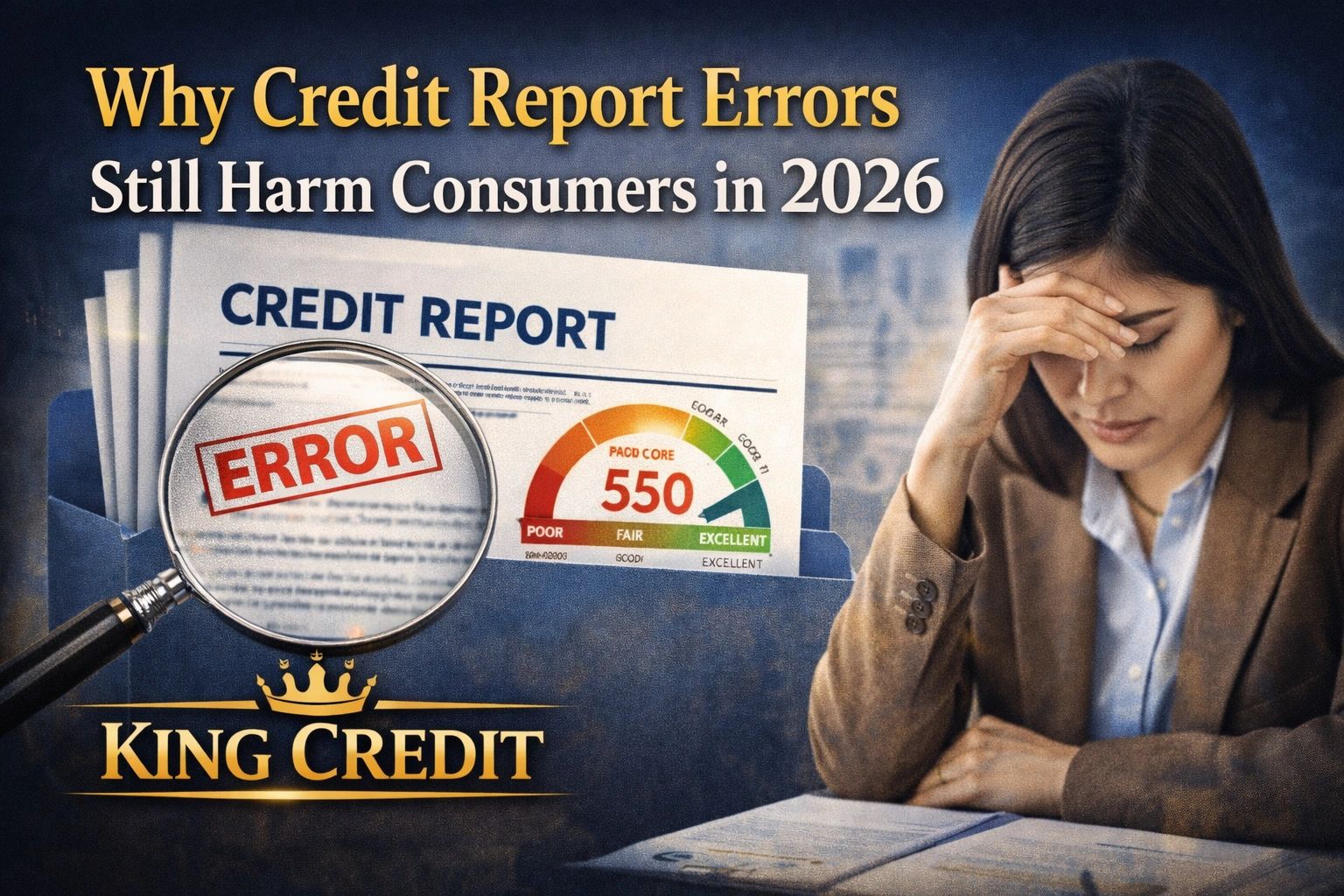
Security measures have likewise advanced. Two-factor authentication is no longer enough; lots of financial organizations now utilize AI to confirm identity through voice patterns or typing rhythms. While this includes a layer of defense, it likewise means consumers must be more vigilant than ever. Regularly inspecting credit reports for mistakes is still an essential duty. If an AI design is fed incorrect information, it will produce an incorrect score, and fixing those errors in an automatic system can in some cases need the assistance of a professional counselor who understands the dispute procedure in 2026.
The shift towards AI in credit scoring is not simply a technical change; it represents a new method of thinking of trust and risk. By concentrating on behavioral consistency instead of simply historical financial obligation, the 2026 monetary system uses a more nuanced view of the person. For those who stay notified and utilize the tools readily available to them, this new era provides more paths to monetary stability than ever previously.

Latest Posts

The Role of Nonprofit Counseling in 2026 Monetary Success
Efficient Ways to Reduce Credit Card Debt This Year
Securing Better Loan Terms in the Nation This Quarter